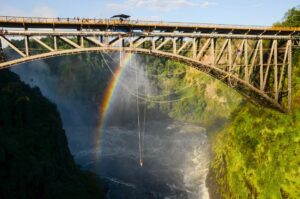
The historic Victoria Falls Bridge, an engineering marvel that has spanned the Zambezi River for over 120 years, is set to be relieved of its heavy industrial burden. Zambian President Hakainde Hichilema has revealed a landmark bilateral agreement between Zambia and Zimbabwe to construct a new bridge across the Zambezi River.
This strategic infrastructure project is designed to divert heavy vehicular and rail traffic away from the iconic 1905 structure, ensuring its long-term preservation as a global heritage site while modernizing the trade corridor between the two Southern African nations.
President Hichilema emphasized that the aging Victoria Falls Bridge was never intended to sustain the weight and frequency of modern heavy-duty logistical demands. Currently, the bridge serves as a vital artery for copper exports and essential imports, but the continuous vibration and stress from massive trucks and freight trains have raised concerns about the structural integrity of the historic monument.
Once the new crossing is completed, a formal ban will be instituted, prohibiting heavy goods trucks and trains from using the old bridge. This move will effectively transition the Victoria Falls Bridge into a dedicated tourist and light-vehicle crossing, allowing visitors to experience the “Smoke that Thunders” without the noise and pollution associated with heavy industry.
The new bridge project is expected to be a state-of-the-art facility located at a site that minimizes environmental impact while maximizing logistical efficiency. By creating a dedicated industrial bypass, both nations aim to streamline the movement of goods along the North-South Corridor.
The current bottleneck at the Victoria Falls border post, often characterized by long queues of haulage trucks, is expected to be eliminated by the modern design of the new crossing, which will likely feature advanced customs integration and expanded lanes to handle the growing volumes of regional trade.
This initiative marks a significant chapter in the “live-and-let-live” diplomatic and economic relationship between Harare and Lusaka. Beyond the logistical benefits, the project represents a deep commitment to cultural and historical preservation.
The Victoria Falls Bridge is a centrepiece of regional identity and a symbol of early 20th-century ambition. By diverting heavy traffic, the two governments are securing the legacy of Cecil John Rhodes’ vision for a “Cape to Cairo” railway for another century. As feasibility studies and funding negotiations progress, the project stands as a testament to the power of cross-border cooperation in balancing the demands of a developing economy with the necessity of protecting world-class heritage.