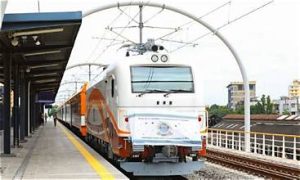
Tanzania is redrawing the map of East African transit with its landmark Standard Gauge Railway (SGR), a fully electrified network that is fast becoming one of the continent’s most ambitious infrastructure success stories — and a project regional observers say offers valuable lessons for countries like Zimbabwe, where rail revitalisation remains a work in progress.
The Tanzanian SGR, a roughly $7.6 billion undertaking stretching more than 1,600 kilometres from the port city of Dar es Salaam to Mwanza on Lake Victoria and onward to Kigoma on Lake Tanganyika, has already transformed domestic travel. The Dar es Salaam-to-Dodoma route, which once took passengers nine hours by conventional rail, has been slashed to just three hours on the new electric line.
Since operations began, the SGR has carried millions of passengers and is steadily being extended in phases toward Rwanda, Burundi and the Democratic Republic of Congo. Positioning Tanzania as the preferred logistics corridor for landlocked Great Lakes economies and intensifying cross-border trade integration across the region.
Beyond passenger travel, the electric SGR’s real economic promise lies in freight: faster, cheaper cargo transit is expected to significantly cut the cost of moving goods between Dar es Salaam’s port and inland markets, a shift with far-reaching implications for regional trade competitiveness.
Zimbabwe’s own rail network, by contrast, remains largely diesel-powered and in urgent need of modernisation. The National Railways of Zimbabwe (NRZ), once capable of moving 12 million tonnes of freight annually in the 1990s, now manages a fraction of that volume, hampered by an ageing locomotive fleet, deteriorating track infrastructure, and years of underinvestment. In response, NRZ has pursued an open-access strategy inviting private operators onto its network, alongside efforts to attract foreign partners for specific revival projects, including a proposed Harare-Chitungwiza commuter line under discussion with Chinese investors.
While Zimbabwe has yet to announce a comprehensive electrification programme on the scale of Tanzania’s SGR, the Tanzanian model is increasingly cited in regional transport circles as a benchmark for what modern, electrified rail infrastructure can deliver: reduced travel times, lower emissions, stronger trade integration and renewed investor confidence in a sector many African nations have long neglected.
As Zimbabwe continues courting partners to recapitalise NRZ and modernise its ageing network, Tanzania’s rapid progress stands as both inspiration and a measure of how far there still is to go — a reminder that with sustained investment, rail can once again become the backbone of regional trade and mobility.