

A newly constructed health facility has opened its doors in the heart of Harare’s central business district, as Population Services Zimbabwe (PSZ) unveils its Eastgate Clinic, the latest physical addition to a network of facilities built and upgraded with support from the Embassy of Sweden.
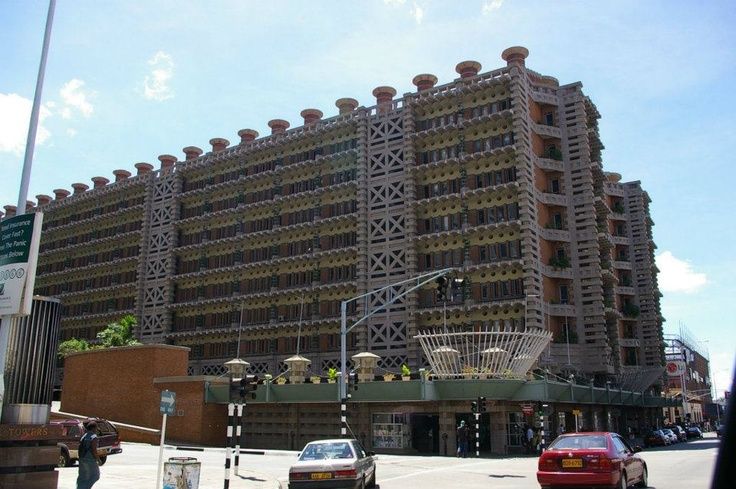
The clinic, located at Eastgate Mall, provides sexual and reproductive health, primary healthcare, and non-communicable disease services for people who live and work in the city centre. Its positioning inside one of Harare’s busiest commercial hubs reflects a deliberate infrastructure strategy: placing purpose-built clinical space where footfall is highest, cutting travel time and barriers for CBD workers and residents seeking care during the day.
The Eastgate Clinic forms part of a broader construction and facility-expansion programme funded through Sweden’s US$19 million investment in Zimbabwe’s sexual and reproductive health sector since 2018. That funding has supported not only clinic buildings but also mobile infrastructure — including an emergency response vehicle and a converted mobile caravan handed over to Matabeleland North, fitted out as a fully functioning mobile clinic to extend services into hard-to-reach areas.
PSZ currently operates a network built up over decades, including 11 static clinics across the country, alongside roughly 10 outreach teams of midwives, doctors, nurses and drivers who travel to underserved parts of Zimbabwe. The Eastgate facility adds a new node to that network, purpose-designed for an urban, high-traffic client base rather than the rural focus of many earlier builds.
Facility development of this kind requires more than laying bricks — clinics must be fitted with private consultation rooms, sterile procedure areas, and confidential waiting spaces to meet clinical and privacy standards for reproductive health services. Ahead of its opening, PSZ signalled the clinic was being finished and prepared to meet these standards, promising a space designed around client comfort and confidentiality once construction and fit-out were complete.
The investment in physical infrastructure comes against the backdrop of Zimbabwe’s wider healthcare capacity constraints, where public facilities are often stretched thin. By building dedicated, well-located clinic space, PSZ and its Swedish partners aim to relieve pressure on public health infrastructure while giving urban clients a nearby, private-sector alternative.
With the Eastgate Clinic now complete and operational, attention turns to how the facility performs in its first months — a marker not just of successful construction, but of whether new brick-and-mortar investment translates into sustained access for the CBD community it was built to serve.