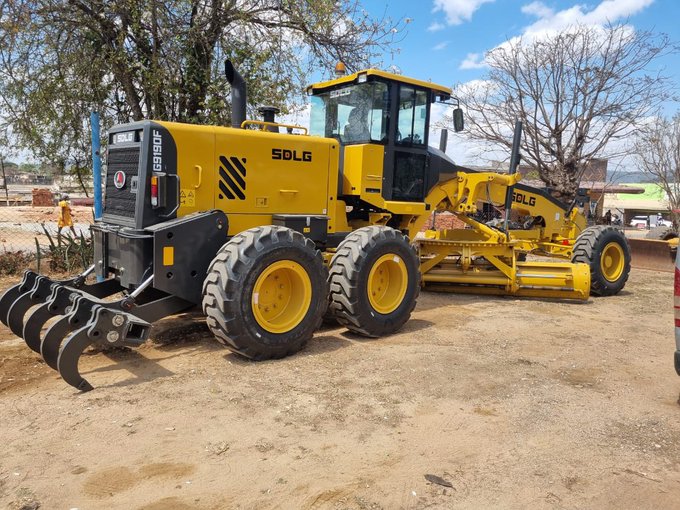

Businesses operating within Mukuvisi Industrial Park in Msasa, Harare, are celebrating the repair of a long-troublesome stretch of road leading to their premises, following a joint effort between the industrial park’s management and the City of Harare. Among those welcoming the improvement is Sawpower, a family-run engineering and cutting-solutions business based at Stand 18424 within the park, which has operated in Zimbabwe for close to three decades supplying equipment from brands including STIHL, Briggs & Stratton and Turner Morris.
In a statement, the company said the potholes that had long plagued the approach to its premises had finally “packed their bags,” bringing an end to what it described as a daily off-road challenge for vehicles and customers alike. The company thanked the collaborative spirit shown by Mukuvisi Industrial Park and the City of Harare in seeing the repair through, noting that deliveries and customer visits could now proceed without the delays and vehicle strain caused by the previous state of the road.
While this repair addresses one stretch of road in one industrial precinct, it speaks to a much larger issue facing Zimbabwe’s economy. Road infrastructure forms the backbone of virtually every productive sector, from manufacturing and mining to agriculture and retail, and its condition has a direct bearing on the cost and reliability of doing business. Potholed or impassable roads slow the movement of goods, increase vehicle maintenance costs, discourage customer footfall to affected premises, and can even deter new investment into industrial areas perceived as difficult to access.
For manufacturing and light industrial hubs such as Mukuvisi Industrial Park, home to a cluster of engineering, hardware and equipment businesses, reliable road access is not a peripheral concern but a operational necessity. Damaged roads translate into longer delivery times, higher transport costs passed on to consumers, and greater wear on commercial vehicles that businesses can ill afford in an already constrained operating environment. Well-maintained roads, by contrast, support smoother logistics, reduce the cost of doing business, and help local industrial areas remain competitive and attractive to both existing tenants and prospective investors.
The Mukuvisi repair also illustrates the value of collaboration between local authorities and the private sector in addressing infrastructure gaps. With municipal budgets across Zimbabwe often stretched thin, partnerships of this kind, where industrial parks, ratepayers and city authorities work together to prioritise and fund repairs, are increasingly seen as a practical way to keep essential infrastructure functional in the interim, even as broader national road rehabilitation programmes continue.
As Zimbabwe works to grow its industrial base and attract investment, the state of roads serving its business districts remains a quiet but significant factor in that ambition. Small, localised fixes like the one at Mukuvisi Industrial Park may not make national headlines, but they represent exactly the kind of practical, on-the-ground improvement that keeps businesses running and local economies moving.