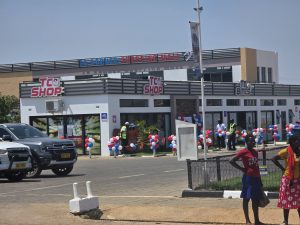
A new fuel and retail complex, the T.C. Corner Filling Station and Shopping Mall, has officially opened its doors in Gokwe Town following a USD1.2 million investment, with officials describing the project as an example of indigenous enterprise development aligned with the country’s National Development Strategy 2 (NDS2).
The facility, led by local businessman Talkmore Charamba, brings together a modern fuel station and adjoining shopping mall under a single development, reflecting a growing trend among Zimbabwean entrepreneurs to combine fuel retail with complementary commercial space in order to maximise the commercial potential of strategically located sites.
Officials at the opening highlighted the project’s compliance with NDS2, the government’s overarching economic blueprint that runs through to 2025 and beyond, which places strong emphasis on indigenisation, private sector-led growth and the development of locally owned enterprises capable of contributing meaningfully to national economic transformation. Projects that meet NDS2 standards are typically recognised for incorporating modern infrastructure, sustainable business practices and a commitment to local ownership and job creation.
As an indigenous enterprise, T.C. Corner is being held up as a demonstration of what local capital and entrepreneurship can achieve when channelled into well-planned commercial infrastructure. For Gokwe, a growing town in the Midlands province long associated with cotton farming and rural commerce, the new complex represents a significant addition to the town’s commercial landscape, bringing modern retail and fuel infrastructure to an area that has often relied on smaller, less developed facilities.
The combination of a filling station with retail shopping space is designed to serve motorists and surrounding communities alike, offering fuel, convenience shopping and other services within a single, accessible location, a format that has become increasingly popular across Zimbabwe’s growing commercial landscape, including in smaller towns beyond the country’s main urban centres.
The opening of the facility adds to a broader pattern of private investment in fuel retail and commercial infrastructure seen across the country in recent years, as Zimbabwean entrepreneurs continue to expand into sectors traditionally dominated by larger, often foreign-owned, corporations. Locally driven projects of this scale are frequently cited by government officials as evidence of the private sector’s growing capacity to mobilise capital for significant infrastructure investment without relying on external funding sources.
For the Gokwe community, the new complex is expected to create local employment opportunities, both during its ongoing operations and through the broader commercial activity it is likely to attract to the area.
As Zimbabwe continues to pursue its NDS2 targets, projects like the T.C. Corner Filling Station and Shopping Mall are likely to be pointed to as tangible examples of the kind of indigenous, private sector-driven investment the strategy seeks to encourage, extending modern infrastructure and local ownership beyond the country’s major cities.