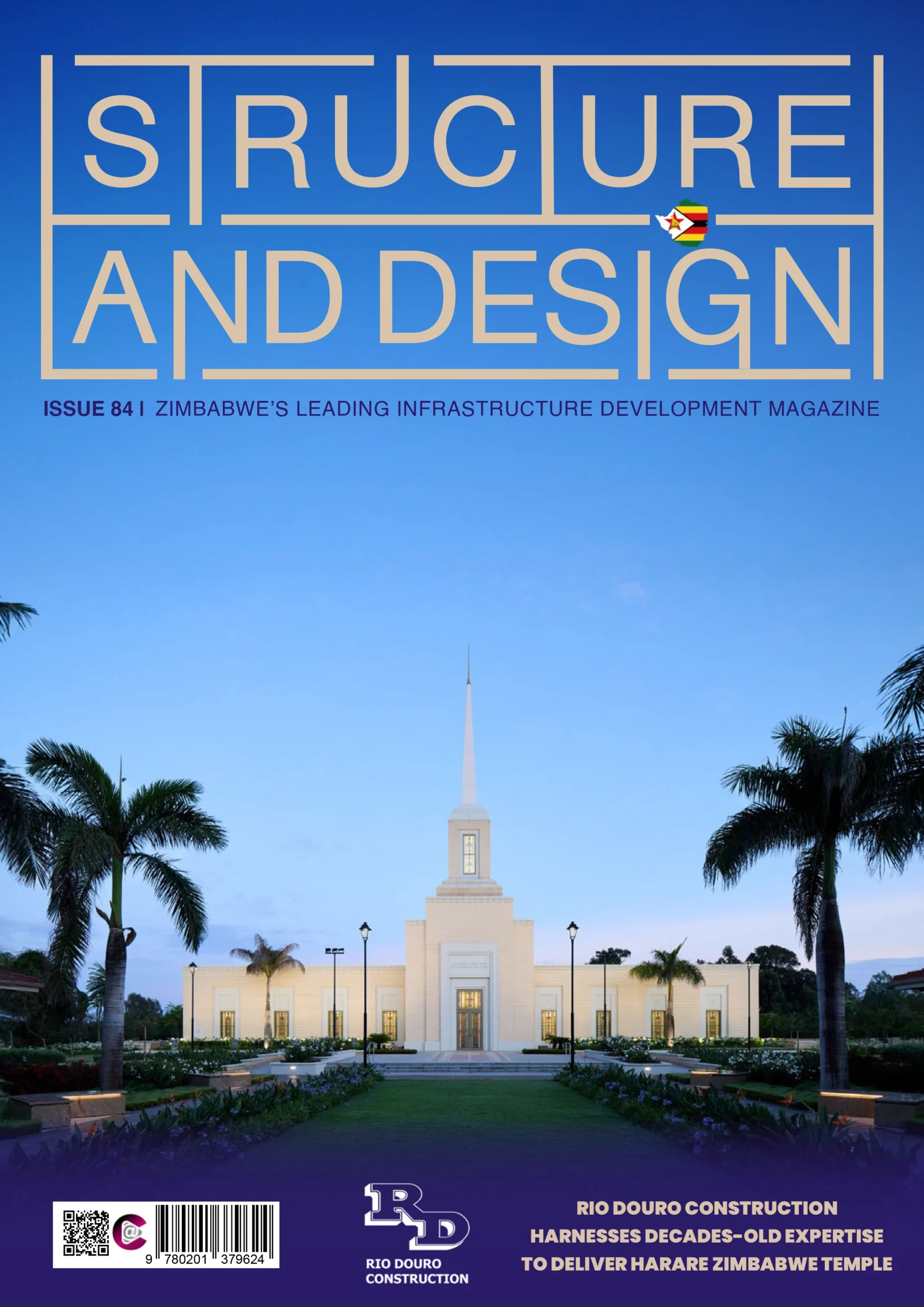
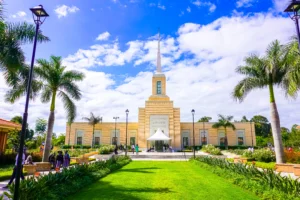
The Highlands neighbourhood of Harare has been transformed by a new landmark that blends spiritual significance with world-class engineering. The Harare Zimbabwe Temple of The Church of Jesus Christ of Latter-day Saints, stands as a crowning achievement for Rio Douro Construction (Pvt) LTD. This project is the result of four years of labour and a construction legacy that predates the company’s 1981 founding.
A legacy of craftsmanship Rio Douro Construction was established forty-five years ago by Antonio Ribeiro and Gloria Patricia Pereira. Starting from a humble home garage, the firm grew into a leading force in the Zimbabwean building industry, earning an “Unlimited Category” classification from the Construction Industry Federation of Zimbabwe (CIFOZ). The leadership—now spearheaded by brothers Richard and David Pereira—carries forward a family tradition of building that spans generations.
The Pereira family notes that their father began building at the age of twelve, following in the footsteps of their grandfather. This deep-rooted expertise was essential for a project as technically demanding as the Harare Temple. Rio Douro operates with a philosophy of “no shortcuts,” a commitment that has allowed them to retain some staff members since their inception in 1981 and successfully complete major works, ranging from the University of Zimbabwe faculties, through private residences to the West End Hospital.
Technical mastery and site preparation
The temple complex sits on an expansive 6.7-acre (2.7-hectare) plot at 65 Enterprise Road. Before the structural elegance of the temple could emerge, Rio Douro undertook a massive earthworks operation. The team moved 10,000 cubic meters of soil within the site and imported an additional 11,000 cubic metres of fill to create the necessary platforms and compact the ground. This initial phase alone took four months to complete.
The structural skeleton of the temple is a robust combination of cast-in-place concrete and approximately 160 tons of reinforcement steel. In total, the project utilized 1,350 cubic metres of concrete. One of the most significant engineering feats involved the decorative precast concrete window frames. These massive units, some weighing up to 20 tons, were cast on the ground and hoisted into position using 90-ton cranes.
Architectural excellence and local materials
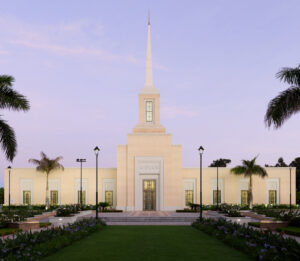
The temple design celebrates Zimbabwean culture through the use of indigenous motifs and materials. The building features a “Agate Travertine” face brick from Corobrik of South Africa, specifically chosen for its unique colour which cannot be replicated using Zimbabwean red soils. A total of 1,135,000 bricks were used across the site, with many walls featuring a thick, load-bearing cavity design to ensure durability and thermal regulation.
The main temple structure covers a built area of 1,602.3 square metres (17,250 square feet). It is topped by a single spire reaching 33 metres into the sky, featuring a modern, slender finial. The architectural language is defined by triangular patterns inspired by the stonework of Great Zimbabwe, visible in the rooflines, window headers, and the intricate art glass designed by Paton
Taylor Architects.
Ancillary buildings and public spaces
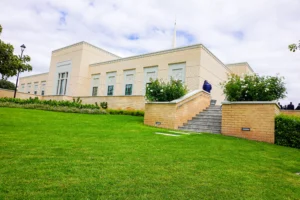
The temple complex is a comprehensive 6.7-acre campus designed to support both spiritual service and the local community. Rio Douro Construction delivered several ancillary buildings that mirror the main temple’s high-quality finishes, ensuring a cohesive aesthetic across the entire property. This includes the Stake Centre, a large meetinghouse specifically built for Sunday worship services, and the specialized utility and office structures that house the mission offices and maintenance facilities. These support buildings are characterized by clean architectural lines and functional details like dark brown louvers that complement the primary masonry.
Furthermore, the campus features dedicated patron and missionary housing, providing essential residential facilities for those traveling from afar. These structures are built with “Firelight Travertine” face brick and Antique Terracotta-tiled hip roofs seen throughout the grounds, maintaining the project’s world-class standards of durability and design. Through integrating
these diverse elements—from the sacred halls of the temple to the practical infrastructure of the offices and housing—Rio Douro has created a self-sustaining environment that serves the needs of the Church and the people of Zimbabwe with equal grace.
The hardscaping of the 6.7-acre property is equally impressive. A paved stone walkway leads toward the temple entrance, lined with mature Royal Palm trees and manicured hedges. Throughout the grounds, Rio Douro installed granite-topped benches and sleek black lampposts to facilitate nighttime reflection. The landscape is a vibrant tapestry of local flora, including the flame lily—Zimbabwe’s national flower—and Bird of Paradise plants.
Throughout the four-year construction timeline, safety remained the highest priority. Despite the height of the spire and the complexity of the scaffolding, Rio Douro maintained a rigorous
schedule of daily “toolbox talks.” This commitment resulted in a perfect safety record with no major injuries reported.
The temple stands as a testament to what local Zimbabwean expertise can achieve. Rio Douro Construction has proven that with the right supervision and a refusal to compromise on quality, world-class landmarks can be built using local labour and materials.