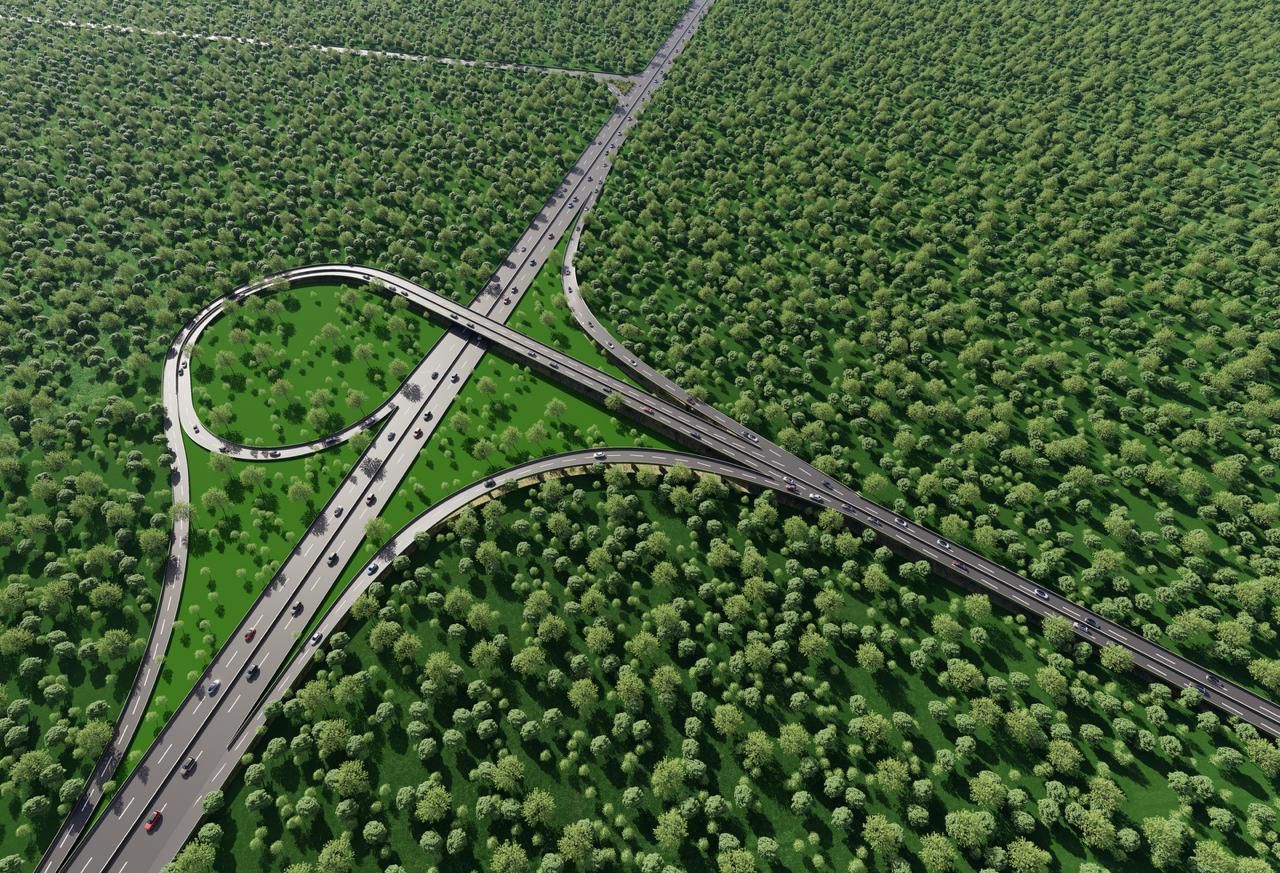
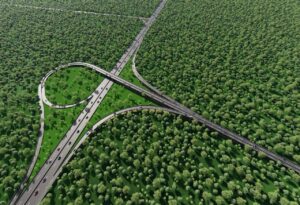
The Ministry of Transport and Infrastructural Development has announced the imminent construction of a state-of-the-art interchange at the Seke Road-Delport Road junction, in a major move to decongest the capital’s southern and eastern traffic corridors.
This massive project, which forms part of the government’s broader Emergency Road Rehabilitation Programme (ERRP2), is set to redefine urban mobility and provide a seamless link between the city’s industrial hubs and high-density residential areas.
The Seke Road-Delport Road junction has long been identified as a critical bottleneck, particularly for commuters traveling between Chitungwiza and Harare, as well as freight traffic heading toward the Robert Gabriel Mugabe International Airport. The introduction of an interchange—a grade-separated junction—will eliminate the current at-grade traffic conflicts, significantly reducing travel times and the risk of accidents at this high-volume intersection.
Beyond the interchange itself, the project includes a significant longitudinal development: the full construction of Delport Road from its eastern terminus in Mabvuku, off the Mutare Road. This extension is a strategic masterstroke in urban planning, creating a direct “outer ring” connection that allows traffic from the eastern suburbs and the Mutare highway to bypass the city centre when traveling toward the airport or the southern industrial sites. By linking Mabvuku directly to Seke Road via a modernized Delport Road, the Ministry is effectively creating a new arterial route that will relieve pressure on Dieppe Road and the central business district.
According to Ministry officials, the project will involve high-specification engineering, including the laying of durable asphalt concrete, the installation of modern drainage systems to mitigate flash flooding, and the implementation of smart traffic signalling. The construction of the Delport Road stretch from Mabvuku will also open up new opportunities for commercial and residential development along the corridor, increasing property values and stimulating local economic activity.
This initiative aligns with President Emmerson Mnangagwa’s Vision 2030, which prioritizes world-class infrastructure as the backbone of an upper-middle-income economy. The Ministry has emphasized that the design phase is reaching completion, with ground-breaking expected to commence shortly. While the construction period will inevitably require temporary traffic diversions, the government has urged the public to look toward the long-term benefits of a modern, efficient, and safer road network.
As Harare continues to expand, this interchange and road extension stand as a testament to the Second Republic’s commitment to “leaving no place and no person behind” in its infrastructure revolution.